

Hey there! As a BOPP film supplier, I'm super excited to walk you through the production process flow of BOPP film. BOPP, or Biaxially Oriented Polypropylene film, is a widely used material in various industries, from packaging to tapes. So, let's dive right in!
Raw Material Preparation
The first step in making BOPP film is getting the raw materials ready. We mainly use polypropylene resin, which is a thermoplastic polymer. This resin comes in small pellets, and it's crucial to choose high - quality ones to ensure the final film's performance.
We carefully select the polypropylene resin based on its melt flow index, molecular weight distribution, and other properties. These factors will affect the film's strength, clarity, and processability. Once we've got the right resin, we blend it with some additives. These additives can include antioxidants, anti - blocking agents, and slip agents. Antioxidants help prevent the resin from degrading during the high - temperature processing, while anti - blocking agents stop the film from sticking to itself, and slip agents improve the film's surface smoothness.
Extrusion
After the raw materials are well - prepared, it's time for extrusion. We feed the blended resin pellets into an extruder. The extruder is like a big, high - tech sausage maker. Inside, there's a rotating screw that pushes the pellets forward through a heated barrel. As the pellets move along, they gradually melt due to the heat generated by the barrel and the friction from the screw.
By the time the molten resin reaches the end of the extruder, it's in a uniform, fluid state. Then, it passes through a flat die, which shapes the molten resin into a thin, flat sheet. This sheet is called the cast sheet, and its thickness is carefully controlled by adjusting the gap in the die and the speed of the extruder.
Biaxial Orientation
The biaxial orientation process is what makes BOPP film special. It involves stretching the cast sheet in two directions: longitudinally (along the machine direction) and transversely (across the machine direction).
Longitudinal Orientation
First, we do the longitudinal orientation. The cast sheet is passed through a series of heated rollers. These rollers are set at different speeds, and as the sheet moves from one roller to another, it gets stretched in the machine direction. This stretching aligns the polymer molecules in the sheet along the machine direction, which significantly improves the film's strength and stiffness in that direction.
Transverse Orientation
After the longitudinal orientation, the sheet enters the transverse orientation unit. Here, the edges of the sheet are clamped by chains, and the sheet is gradually heated and stretched transversely as it moves through a heated oven. This stretching further aligns the polymer molecules in the transverse direction, giving the film excellent strength and mechanical properties in both directions.
The biaxial orientation process also enhances the film's optical properties, such as clarity and gloss. It makes the film more transparent and gives it a nice, shiny appearance.
Cooling and Heat Setting
Once the biaxial orientation is done, the stretched film needs to be cooled down quickly. We use cooling rollers or air knives to rapidly reduce the film's temperature. This quenching process helps to lock in the molecular orientation and the physical properties of the film.
After cooling, the film goes through a heat - setting process. In this step, the film is heated again, but to a lower temperature than during the orientation process. The purpose of heat setting is to relieve any internal stresses in the film and to stabilize its dimensions. This ensures that the film won't shrink or deform during storage or subsequent processing.
Surface Treatment
Depending on the end - use application, the BOPP film may need surface treatment. One common surface treatment is corona treatment. In corona treatment, the film passes through a high - voltage electrical field. This electrical discharge creates a plasma that modifies the surface of the film, making it more receptive to inks, adhesives, and coatings.
Corona - treated BOPP film, like our BOPP Corona Film, is widely used in printing and laminating applications. It allows for better ink adhesion and improves the overall print quality.
Winding and Quality Control
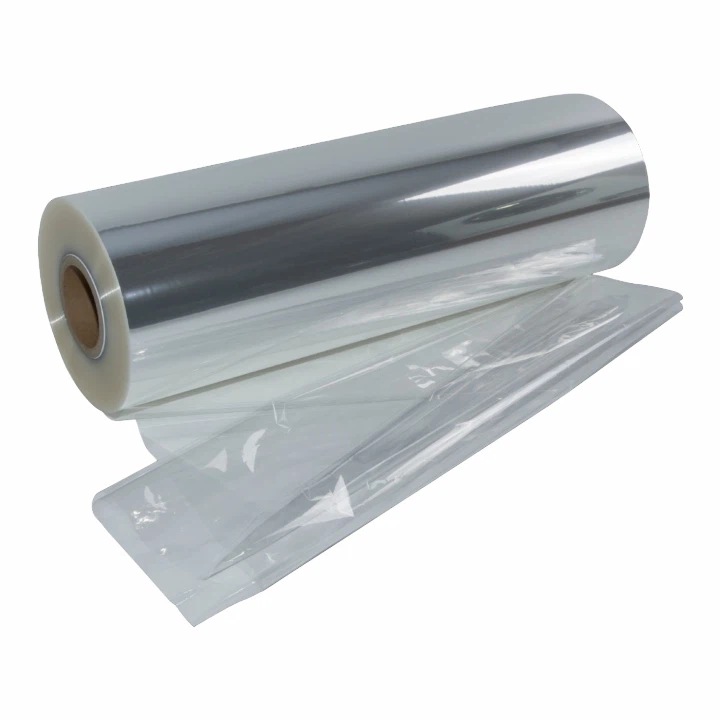
After all the previous steps, the finished BOPP film is wound onto large rolls. These rolls can be very long, sometimes several kilometers. During the winding process, we closely monitor the film's thickness, width, and tension to ensure consistent quality.
Quality control is a crucial part of the production process. We use various testing methods to check the film's physical, mechanical, and optical properties. For example, we measure the film's thickness using precision gauges, test its tensile strength on a tensile testing machine, and evaluate its clarity and gloss using optical instruments. Only the films that meet our strict quality standards are sent to the customers.
Applications of BOPP Film
BOPP film has a wide range of applications. Here are some common ones:
Packaging
BOPP film is widely used in packaging. Our BOPP Film for Bag Packaging is perfect for making all kinds of bags, such as food bags, clothing bags, and gift bags. It provides excellent barrier properties against moisture, oxygen, and light, which helps to keep the products inside fresh and protected.
Tapes
Another major application is in tapes. Our BOPP Film for Coating BOPP Tape is used as the base film for making adhesive tapes. The film's high strength and smooth surface make it ideal for tape production. It can be easily coated with adhesives and cut into different widths and lengths.

Conclusion
So, that's the production process flow of BOPP film in a nutshell. It's a complex but fascinating process that involves multiple steps and high - tech equipment. At our company, we're committed to producing high - quality BOPP film that meets the diverse needs of our customers.
If you're interested in purchasing BOPP film for your business, whether it's for packaging, tapes, or other applications, don't hesitate to reach out. We're here to offer you the best products and services. Contact us today to start a procurement negotiation, and let's work together to find the perfect BOPP film solution for you.
References
- Modern Plastics Encyclopedia. McGraw - Hill.
- Handbook of Plastic Films. John Wiley & Sons.