

Is Jumbo BOPP Tape Roll recyclable?
As a supplier of Jumbo BOPP Tape Rolls, I often encounter inquiries from customers regarding the recyclability of these products. This topic is not only relevant to environmental concerns but also to the long - term sustainability of our business and the industry as a whole. In this blog, I will delve into the question of whether Jumbo BOPP Tape Rolls are recyclable, exploring the materials they are made of, the recycling process, and the challenges and opportunities in recycling them.

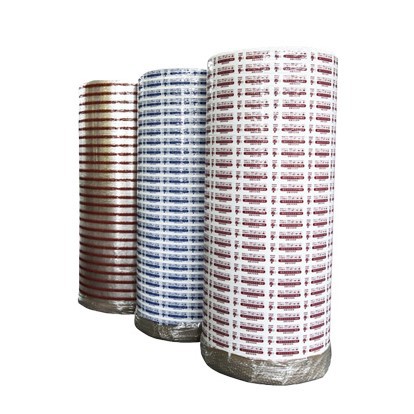
What are Jumbo BOPP Tape Rolls?
Jumbo BOPP (Biaxially Oriented Polypropylene) Tape Rolls are large - scale adhesive tapes used in various industries such as packaging, shipping, and manufacturing. They are known for their high strength, clarity, and excellent adhesion properties. The BOPP film that forms the base of these tape rolls is created by stretching polypropylene in both the machine and transverse directions, which enhances its physical properties.
There are different types of Jumbo BOPP Tape Rolls available on the market. For instance, the Jumbo Roll Cello Tape is a common variety, which is often used for general packaging purposes. The Crystal Clear BOPP Jumbo Roll offers high transparency, making it suitable for applications where the visibility of the packaged item is important. And the Logo Printing BOPP Tape Jumbo Roll is used for branding and marketing on packages.
Composition of Jumbo BOPP Tape Rolls
To understand the recyclability of Jumbo BOPP Tape Rolls, we first need to look at their composition. The main component of a BOPP tape roll is the BOPP film, which is a type of thermoplastic polymer. Polypropylene is a widely used plastic due to its low cost, good chemical resistance, and high flexibility.
In addition to the BOPP film, the tape also has an adhesive layer. The adhesive can be made from different materials, such as acrylic, rubber - based, or silicone - based adhesives. These adhesives are designed to provide strong bonding between the tape and the surface it is applied to. Some tape rolls may also have additional layers, such as a primer layer to improve the adhesion of the adhesive to the BOPP film, or a release liner on the adhesive side to prevent it from sticking prematurely.
The Recycling Process
The recyclability of plastics depends on several factors, including the type of plastic, its purity, and the availability of recycling facilities. In theory, polypropylene, the main material of BOPP tape rolls, is recyclable. Polypropylene has a resin identification code of 5, which means it can be processed in certain recycling systems.
The general recycling process for polypropylene involves several steps. First, the plastic waste is collected and sorted. This is a crucial step because contaminants and other types of plastics can affect the quality of the recycled material. After sorting, the polypropylene is shredded into small pieces. These pieces are then washed to remove any dirt, labels, or other impurities.
Next, the shredded and cleaned polypropylene is melted and re - pelletized. The re - pellets can then be used to manufacture new plastic products. However, when it comes to Jumbo BOPP Tape Rolls, the presence of the adhesive layer and other additives complicates the recycling process. The adhesive can cause problems during melting and extrusion, as it may not melt at the same temperature as the polypropylene or may leave residues that affect the quality of the recycled material.
Challenges in Recycling Jumbo BOPP Tape Rolls
One of the main challenges in recycling Jumbo BOPP Tape Rolls is the separation of the BOPP film from the adhesive. The adhesive is designed to bond strongly to the film, and separating them requires specialized processes. Most traditional recycling facilities are not equipped to handle this separation effectively.
Another challenge is the presence of other additives and contaminants. Some BOPP tape rolls may have printed logos or labels, which are made of inks and dyes that can contaminate the recycled material. Additionally, if the tape has been used on dirty or contaminated surfaces, it will carry these contaminants into the recycling process.
The lack of awareness and infrastructure also poses a significant challenge. Many consumers and businesses are not aware of the proper way to recycle BOPP tape rolls. And in some regions, there may be a lack of recycling facilities that can handle this type of plastic waste.
Opportunities for Recycling
Despite the challenges, there are also opportunities for recycling Jumbo BOPP Tape Rolls. Some companies are developing new technologies to separate the BOPP film from the adhesive more efficiently. For example, chemical processes are being explored to dissolve the adhesive without damaging the polypropylene.
There is also a growing demand for sustainable packaging solutions. As consumers become more environmentally conscious, businesses are looking for ways to reduce their environmental impact. Recycling Jumbo BOPP Tape Rolls can be part of a broader sustainability strategy for companies in the packaging and shipping industries. By recycling these tape rolls, companies can reduce their reliance on virgin plastics and contribute to a circular economy.
Conclusion
So, is Jumbo BOPP Tape Roll recyclable? The answer is yes, but with limitations. While polypropylene, the main material of BOPP tape rolls, is recyclable in theory, the presence of the adhesive layer and other additives makes the recycling process more challenging.
As a supplier of Jumbo BOPP Tape Rolls, we are committed to promoting sustainable practices. We are constantly exploring ways to improve the recyclability of our products, such as working with research institutions to develop better separation technologies and collaborating with recycling facilities to ensure proper disposal.
If you are interested in purchasing our Jumbo BOPP Tape Rolls or have any questions about our products, we encourage you to contact us for further discussion. We look forward to the opportunity to work with you and contribute to a more sustainable future.
References
- "Polypropylene Recycling: A Review", Journal of Environmental Management, Volume 222, 15 July 2018, Pages 207 - 217
- "Recycling of Plastic Packaging: A Global Perspective", Packaging Technology and Science, Volume 31, Issue 2, February 2018, Pages 61 - 76